English
 Suomi
Ceiling fan sound
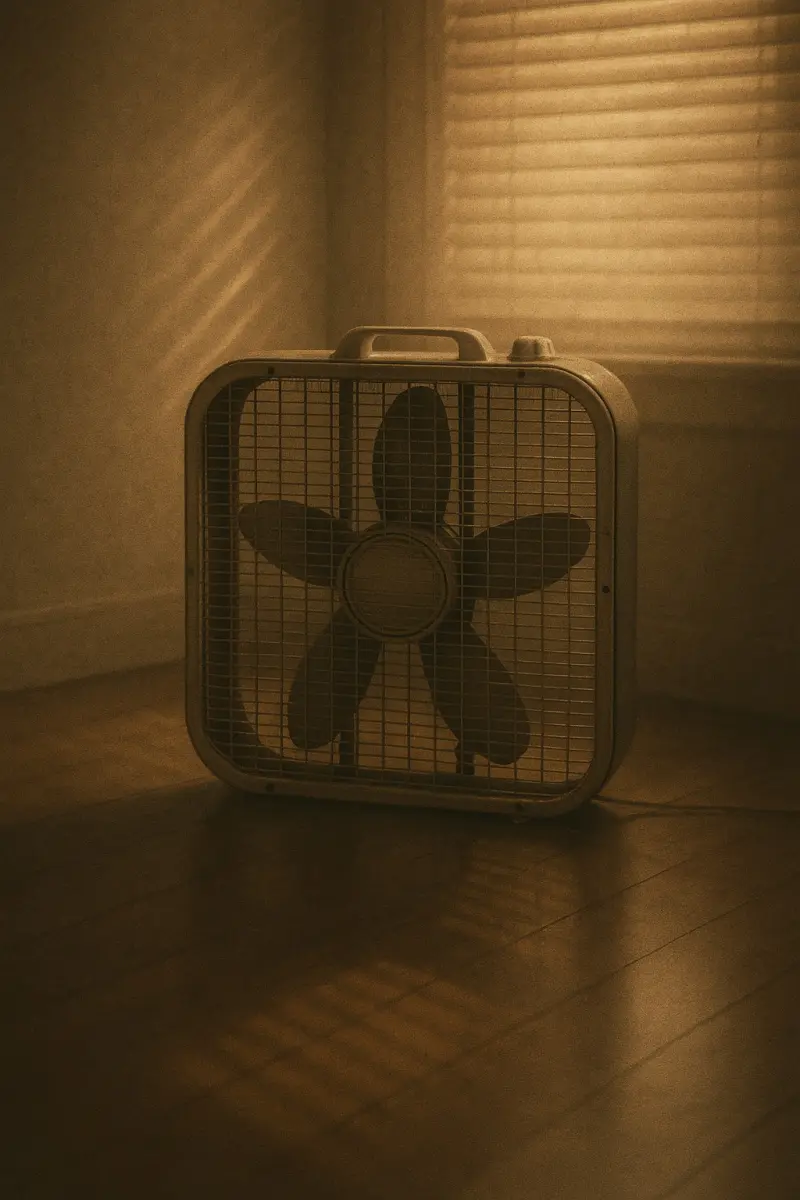
Hear the slow overhead rhythm of a ceiling fan. Compare its blade movement with the broader spinning buzz of a box fan.
One-minute sample
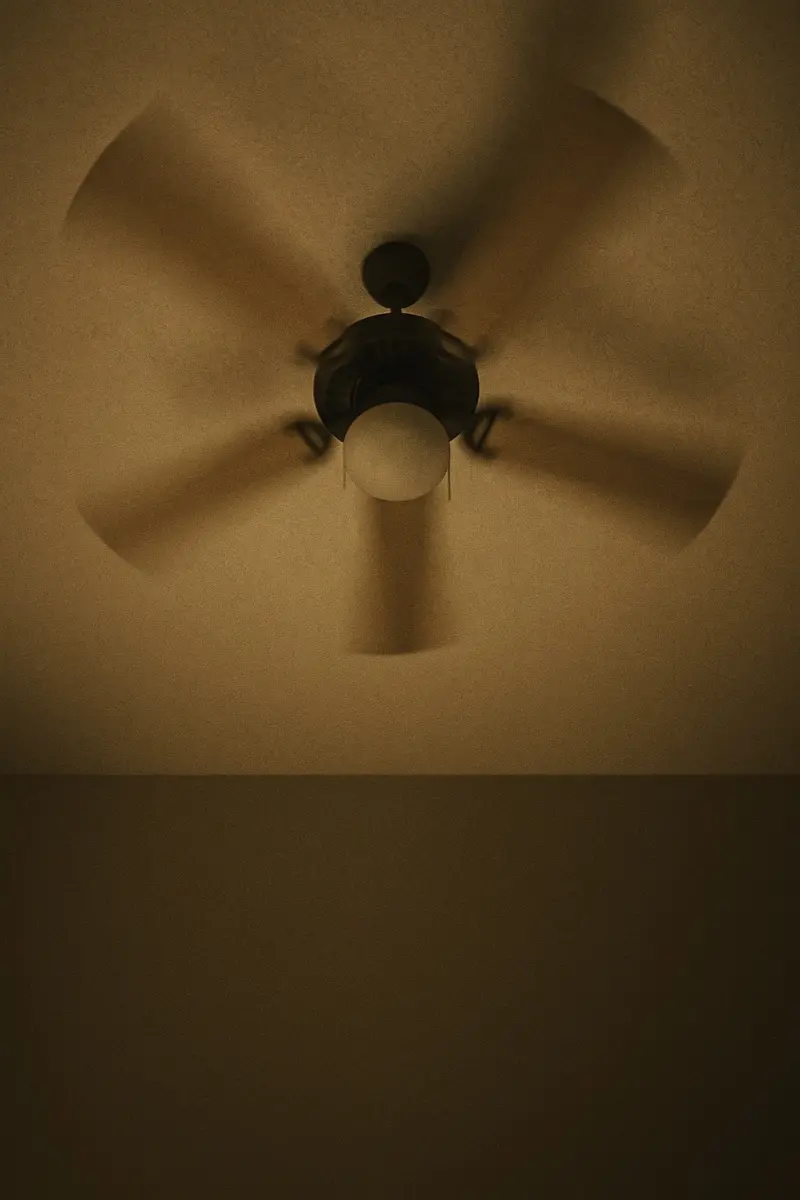
Overhead blades or a continuous rush?
Ceiling fan gives the air a slow pulse as the blades pass overhead. Box fan fills the room with a broader, more constant rush and a clearer motor note. Follow one cycle of the ceiling fan before switching. If the pulse stands out, Box fan is the steadier example.
Box fan
Band by band, in numbers
| Band | Ceiling fan | Box fan | Difference |
|---|---|---|---|
| 2 kHz | −8.6 dB | −15.1 dB | −6.5 dB |
| 2.5 kHz | −9.9 dB | −16.1 dB | −6.2 dB |
| 3 kHz | −11.2 dB | −16.9 dB | −5.7 dB |
| 4 kHz | −13.7 dB | −18.4 dB | −4.7 dB |
| 5 kHz | −15.8 dB | −19.9 dB | −4.1 dB |
| 6 kHz | −17.5 dB | −21.3 dB | −3.8 dB |
| 8 kHz | −20.0 dB | −23.7 dB | −3.7 dB |
| 10 kHz | −21.6 dB | −25.4 dB | −3.8 dB |
| 12 kHz | −22.7 dB | −26.6 dB | −3.9 dB |
How the sounds were measured · Download the measurements (CSV)
Listen in Hush
Both are in Home sounds with Hush Plus. In Ceiling fan, lower Blades to soften the repeated passes and keep Motor for a more constant bed. The Box fan Air slider controls its broad rush. Save the version that fits the room and use it offline.